Every cost faces the same test: was it bought for the business, and is it used for the business? Cameras, lights, microphones and editing software usually pass. A phone, a car and your home pass for the share you use for work. Everyday clothes and ordinary meals almost never pass, even when they appear on camera. Travel counts when the trip itself is for work, not when work happens on a holiday.
- £1,000of trading income a year, gifts included, before you need to tell HMRC
- 55pa business mile by car for the first 10,000 miles, from 6 April 2026
- £10 to £26a month for working from home, at HMRC’s flat rate
- 25 hoursa month at home before the flat rate applies
Gifts count as income. Products and services a brand sends you for promoting it are taxed like a fee, at what they would have cost you to buy. If your trading income, gifts included, is more than £1,000 in a tax year, you need to tell HMRC.
Can a creator claim a new camera?
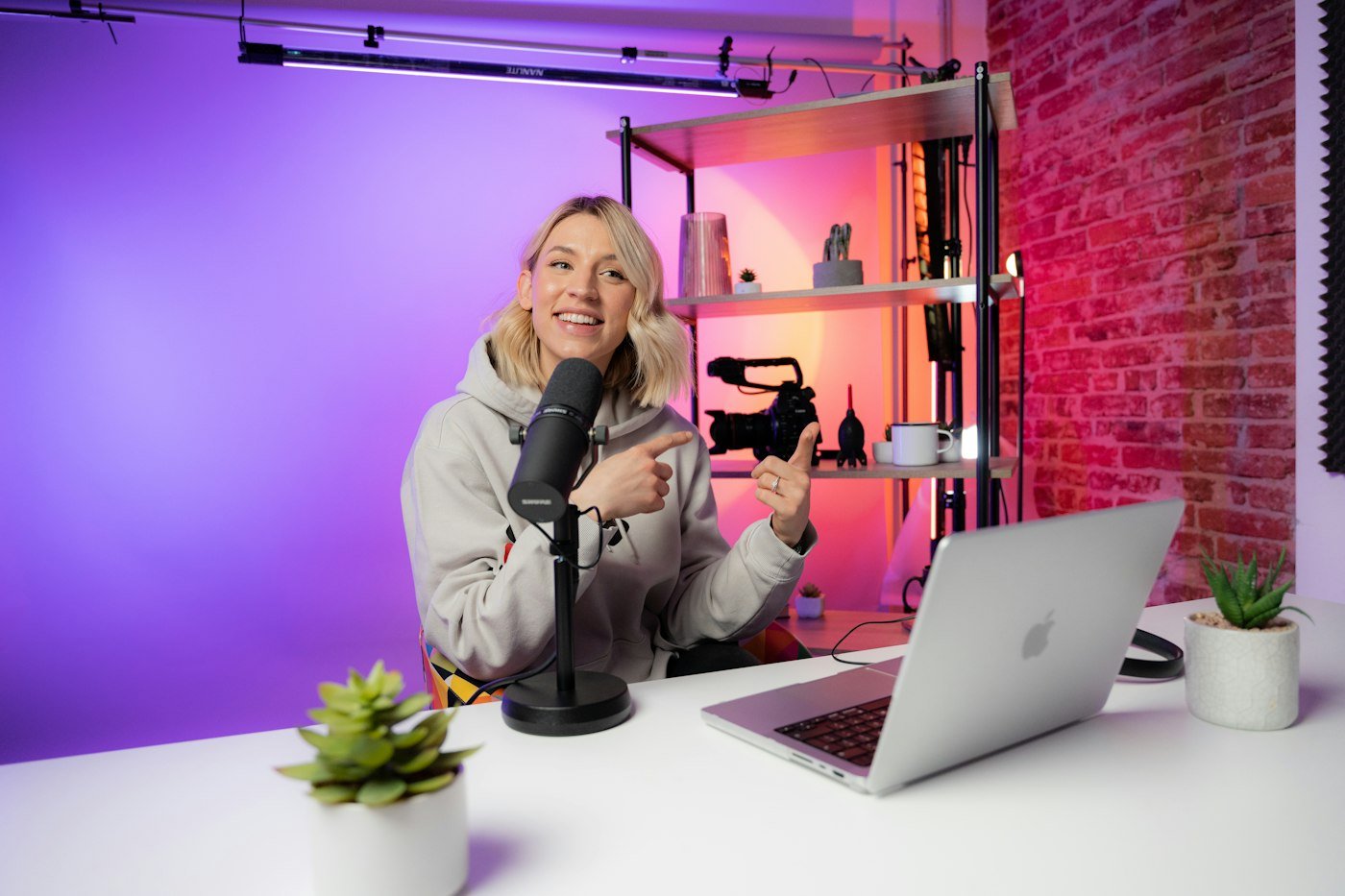
Yes, for the share you use for the business. A camera, lenses, a microphone, lights and a tripod bought to make your content are business equipment. How the claim works depends on how your accounts are kept:
- Cash basis, the standard method for sole traders: the cost goes in as an expense in the year you pay for it.
- Traditional accounting: the cost goes in as a capital allowance, and the annual investment allowance usually lets you deduct the full cost in the same year.
If the same camera also covers holidays and family birthdays, only the business share can be claimed. Work the share out in a way you could explain, and keep the receipt with a note of what the kit is for.
Can influencers claim clothing for content?
Usually not. GOV.UK says you cannot claim for everyday clothing, such as suits, shirts, dresses or ordinary shoes, even if you wear them for work. An outfit bought for a video is still everyday clothing, because it could be worn anywhere, and that stays true if it only ever appears on camera.
The exceptions are narrow:
- costumes used for acting, entertaining or advertising, as long as they are not everyday clothing, such as a character costume for a sketch
- protective clothing, or a uniform that is not ordinary wear
Clothes sent by brands are income. If a brand sends you an outfit to feature, its value counts as income from your content, the same as a fee would.
Can a creator claim a new iPhone?
Yes, for the business share. A phone you film, edit and post on is a working tool, but nearly everyone uses theirs for personal things too, and GOV.UK says the non-business use of a phone cannot be claimed. So the claim is a share: of the handset, and of the monthly contract.
Pick a way of measuring the share that you could explain if asked, such as a typical month’s screen time or data use, and use it consistently. A second phone kept only for your content can be claimed in full.
Worked through. A £1,200 phone used about 60% for content gives a claim of £720. On a £30 a month contract, 60% is £18 a month, or £216 over the year.
Can creators claim travel costs?
Yes, when the trip is for the business. Train, bus, air and taxi fares, hotel rooms, and meals on an overnight business trip all count when you travel to film, to a shoot or to a brand event.
If you drive your own car, you can claim a flat rate per business mile instead of the real cost of fuel and running the car. From 6 April 2026 the rate is 55p a mile for the first 10,000 business miles in the year and 25p a mile after that. Parking and other travel can be claimed on top.
What does not count is a trip that is really a holiday. Posting a few videos from a week away does not turn the flights into a business expense. Where a trip mixes the two, only the costs that are there purely for the work, such as an extra night for a shoot, are safe to claim.
Can a creator claim editing software?
Yes. Editing software, design tools, stock music and footage libraries, scheduling apps and cloud storage are business costs when you use them for your content. GOV.UK lists software you pay for regularly to renew a licence as an allowable expense, however long you go on using it.
Software bought outright with a one-off payment is an expense under the cash basis, or a capital allowance under traditional accounting. A plan shared with personal use, such as a family storage plan, is claimed for the business share.
Can a creator claim meals while creating content?
Usually not. You would eat whether you were filming or not, so meals during a working day are a personal cost, even on location and even when the food appears in your video. A meal with a brand contact is not allowed either: GOV.UK says you cannot usually claim for food or drink provided to clients or suppliers.
Meals can be claimed when you are on an overnight business trip. Food that is the subject of the content, such as the ingredients for a recipe video, is a closer call: it can be a cost of making the video, but if it ends up as your dinner HMRC is likely to see it as a meal. Keep it modest, and keep a note of which video it was for.
Can a creator claim their home office?
Yes, a share of it. If you film, edit or plan from home, part of your household costs belongs to the business. There are two ways to claim it:
- The flat rate. £10 a month for 25 to 50 hours of business use at home, £18 for 51 to 100 hours, and £26 for 101 hours or more. Below 25 hours a month the flat rate cannot be used.
- A share of the real costs, such as heating, electricity and water, worked out from the rooms you use and the time you use them for work.
The flat rate does not cover phone or internet, so the business share of your broadband can be claimed on top of it. Sixty hours a month at home for a whole year comes to 12 × £18, which is £216.
A room that is only a studio. Using part of your home only for the business can support a larger claim, but it can also affect the tax when you sell your home. Talk to us before you claim that way.
Keep reading.
Every figure in this note was checked against GOV.UK on 16 October 2026 and is for the 2026 to 2027 tax year unless it says otherwise. It is written for creators who work as sole traders; a creator who works through a limited company follows the company rules. Desk Notes are general guidance for the UK, not advice on your own situation.
The number behind this noteThe sole trader tax estimate shows what your profit costs in tax once your expenses are taken off.
Open the tax estimateMore Desk Notes

Rather we did it for you?
Claim everything that counts, and nothing that does not.
We go through your year’s costs with you, work out the business share of your phone, car and home, and file your return early. One return is £150, and a sole trader package is £300 a year.